
Greenpixie provides cloud emissions data to help companies take control of their carbon footprint, reduce spending, and lower their emissions.
We spoke to the CEO of the company, former Infotex employee John Ridd, to find out a bit more about his journey, cloud computing emissions, and Greenpixie’s mission to help reduce them.
It would have been about two years ago from ideation when me and my co-founder, Will, CTO of the company, had the idea during a hackathon. We had heard about digital emissions making up over 2% of global emissions, which was more than that of the entire aviation industry.
We felt that there was a real business opportunity to quantify this issue and perhaps reduce it using the scalability of digital and the availability of data for this particular sustainability issue.
We created an MVP (Minimum Viable Product) and first focused on websites: we came up with a way to quickly estimate the emissions of our website homepage, which we sent out via email marketing and got a lot of responses – we thought, we’re onto something here! That started our journey into digital sustainability. It just so happened we didn’t end up doing websites, but cloud computing emissions, however the principles that we started with remained the same: a scalable way to measure and reduce digital emissions.
By 2030, digital emissions are predicted to be over 10% of global emissions due to continuing demand for data. A large amount of these digital emissions is cloud computing, but also the internet itself; Chat GPT, streaming services – it all ends up with data centres, which suck up an incredible amount of electricity. A lot of metals and rare minerals are used to create all this hardware server equipment and continually replenish it – I think the average lifespan of a server in a data centre for cloud computing is only about four years. A recent Telegraph article refers to data centres outside of London as ‘energy vampires’ because of their electricity usage impacting residential build plans.
It’s a combination of those two things, the huge amount of electricity used, and the materials and minerals needed. There’s also a third dimension, which is water usage. Data centres take in a colossal amount of water in order to keep things cooled. One example is a data centre in Nevada, which was recently covered in BBC’s Panorama programme a couple of months ago, Is the Cloud Killing the Planet?, which used one billion litres of water a year.
That gives you an idea of how our digital world and cloud computing actually causes a very big sustainability issue.

This problem is really a business and enterprise problem. It’s not going to change from us at home not watching Netflix so much, or reducing our own digital emissions, because that’s a drop in the ocean compared to where the problem lies, which is with businesses and enterprise. So we focus on cloud computing.
Software engineers in companies essentially rent servers from data centres owned by Amazon, Google and Microsoft, such as Microsoft Azure or AWS. Hundreds or even thousands of tons of emissions are created from renting all these servers. Currently, there’s no real way for companies to have reliable cloud computing emissions data. This is due to cloud providers not being transparent enough to ultimately provide this information in a way that is really compliant with regulation due to multi-cloud setups within companies.
Secondly, the big factor, which we focus on, is there’s a large amount of cloud waste in the way that enterprises utilise the cloud. Software engineers over purchase server space when they are building out the tech corporations for companies. This means that 30% of servers that are being turned on, left on and used, don’t need to be. So there’s 30% more emissions which also correlates with a 30% overspend, and the companies are paying.
What GreenPixie does is provide companies with the data needed to comply to the latest regulations. One of the big ones is CSDR coming through the EU, which makes companies responsible for their cloud computing emissions, and falls under Scope 3 (the supply chain) in the ESG framework. Secondly, we enable software engineers to reduce emissions at source: we quantify the emissions that are being wasted and then they can clean up the waste through the way that they’re building out their tech, saving money as they do that.
I would say when it comes to digital emissions, they’re very actionable and very measurable when the right tools are out there. I’m actually very optimistic that we can reduce this ‘10% or more’ figure by 2030.
The truth is doing it for the good of the planet normally doesn’t fly when it comes to business priorities, because everyone has so many other priorities. Leadership teams in companies often need to have successful sustainability initiatives of reducing at source so there needs to be cost incentives, which we provide. We’re optimistic in our own focus that this is going to be adopted and there are going to be a lot of emissions prevented.
As a wider sustainability lens, there’s been a move away from offsetting, because really what that is in practice is companies outsourcing their responsibility. There’s been some high profile greenwashing legislation coming through, which it’s going to stop companies getting away with that. As long as companies are clever in trying to incentivize the enterprises to reduce their emissions, we can get there. Cloud is a really good example of that, I think.
We covered cloud emissions at COP 27 for the first time. And we have a really amazing advisory board that opens up opportunities like this.
There is responsibility when it comes to putting out the best information, but there’s a real network of businesses in industry sustainability at this point. So there’s institutions, such as the SDIA (Sustainable Digital Infrastructure Alliance) who are focusing a lot on the science behind this. There is also open source tooling, Cloud Carbon Footprint, which we’ve built upon and improved to be able to give emissions data. We’re connected into all the information to allow us to be leaders in this space. It’s also become more mainstream now, on BBC One a couple of months ago cloud computing emissions were covered as a top level issue.
There is awareness now, but we were one of the first to build a business around this.
We’re fundraising in order to bring this to market in a very big way, and we’ve already got this data product that brings transparency over the issue and allows software engineers to start acting on it.
So really we want to go down the route of growing out the team. We’ve got six full time currently, but we want to get a lot bigger than that now we’ve brought a product to scale. So hopefully we can be servicing hundreds of company’s cloud emissions in the near future, making enough revenue ourselves and ride the wave of what we’ve built.
Yeah, I have a lot to be thankful for for my time at Infotex. I actually did an interview fairly recently and I spoke about Infotex and about Tim Webster (My First Boss).
Infotex is a very giving company that enables companies like Greenpixie to emerge because of people like Tim. Infotex is generally very generous with their time and has this tech mindset that allows companies like this to be built.
The General Data Protection Regulation came into effect on 25th May 2018. Its goal is to protect the rights of individuals where personal data is being used. It does this by outlining the rights of individuals, requiring a lawful basis for the processing of personal data, and placing expectations on how personal data is managed.
In practice, it can be time-consuming and difficult to adhere to GDPR and it is not always clear how specific scenarios should be interpreted. This sometimes creates a laissez-faire attitude towards it where it can be treated as a box-ticking exercise.
At its heart though GDPR, when implemented correctly, benefits us all. Fundamentally it is about understanding the breadth of the personal data that you are capturing and reviewing its journey from the individual through your business-controlled systems and processes and oftentimes its onward journey to third parties.

Without this process, it’s very easy to fall into a situation where you are capturing personal data without even realising it. Keep in mind that GDPR takes a fairly broad approach to what constitutes personal data (including IP addresses and cookies where they can be utilised to identify an individual). Producing a modern website is complex and this complexity increases all the time. Whilst sometimes functionality is programmed from scratch for a specific website, there are also numerous choices when determining which 3rd party services to utilise or integrate with. Take something simple like an integration with a page-sharing service. Perhaps it utilises some embeddable code to render the icons and facilitate sharing. Innocent enough on the surface but is the script capturing any data? Is any of the data personal? Where is it sent? What happens to that data? How do we request its access/deletion?
Another common example is a contact form to capture a simple message (perhaps a name, contact number, and message). This seems relatively straightforward but there are a number of questions we should be asking such as, do we need all of that data? Where is the message being sent? Is it stored anywhere? Does it get sent via email to an email client? Is that being downloaded and stored? Is it passed on to other departments within your company or travel onward to other 3rd party systems? Would you be able to recover/delete that data if requested?
It’s important to state that GDPR does not stop you from doing these things. It asks you to consider whether you need to do them and, if you do, that you do so responsibly and transparently without infringing on the rights of individuals.
From a business perspective, there is great value in understanding your data:
We owe it to ourselves to carefully consider how we capture, process, and share personal data. We shouldn’t just implement a new service, integration, or tool without first looking at it through a data protection lens. A useful exercise is to consider whether you would be comfortable with your own personal data being processed in that way.
As a final thought, we are entering a world where AI is going to be a part of our everyday lives. AI systems require input in order to respond (either in the form of a question or, as another example, the context around something being analysed such as a piece of code). This input has the very real possibility to contain personal or sensitive data. Where does that personal data go? Who is it shared with? Can it easily be recalled/deleted? These questions do not have easy answers and it remains to be seen how AI will be regulated to provide the same protections currently offered by GDPR.
If you need help understanding your data please get in touch.
For those of us who live in the Microsoft world, .NET has been revolutionary over the last 20 years.
It enables developers to collaborate easily and write, test and fix code efficiently, as well as supporting builds for a range of different applications, including desktop apps, mobile apps, and website apps.
Our .NET applications are developed to sit behind the websites, processing data, integrating with other platforms and providing back office user functionality that is so important to make websites work effectively on the front end.
Microsoft .NET is an open source developer platform that assists the creation of various types of applications.
.NET has two main different versions:
.NET Framework is the original version that Microsoft introduced back in 2002. It was a replacement for Visual Basic, which was used by many developers to build applications for Windows. Around this time was when Internet technology was really taking off, with many organisations building not only websites but Intranets as well.
Alongside .NET, Microsoft also introduced Visual Studio .NET, which was an Integrated Development Environment (IDE). This enabled developers to develop software code, build this code, and ultimately run it on their computers to debug before putting it live. This IDE software is updated every couple of years.
The last version of .NET Framework 4.8 was released in April 2019, with an updated security version 4.8.1 in August 2022.
Microsoft has now retired the .NET Framework and moved across to what was known as .NET Core before this became .NET 5 in November 2020. Through this cross-platform version, Microsoft has expanded its platform to support .NET developers looking to leverage other platforms, and to attract customers looking to build apps with other tools including Node, PHP, and Java.
As with most things Microsoft, there are continual improvements and new versions being released each year. .NET 7 was released in November 2022 with .NET 8 due to release in November 2023.
What this means for us, as developers, is there is a continuous learning process to keep up to date and keep our software as up to date as possible, as unfortunately Microsoft doesn’t support their .NET versions for very long. .NET 7 will stop being supported in May 2024.
For our customers, it means that we have to focus on keeping applications up to date, and occasionally having to rewrite these from scratch to be able to utilise new functionality and keep applications secure.
April 27 is International Design Day. To celebrate, here’s a little look into the history of web design.
Design is (and always has been) all around us, in the built and digital environments we occupy. Digital design – including web design – is a particularly dynamic force, a place where design intersects with business, art, education, AI, music, – you name it.

Good web design can make information accessible, bring people to the services they need, inform the world, and improve business performance.
In the late 1980s the world wide web was first recognised when physicist Tim Berners-Lee created the software to create what we now know as web pages.
This 80s era of text-only interfaces, designed on black screens with coloured pixels, is sometimes known as the dark ages…
The 1990s saw huge changes in the world of web. In 1990, three university students launched what is thought to be the first-ever search engine, Archie. This was closely followed by the World Wide Web browser for editing web pages (subsequently named Nexus), also created by Berners-Lee.
Notable on the design front was the introduction of Adobe Photoshop 1.0. The full image editing application was released for the Macintosh system (6.0.3) for editing images that had been scanned onto a computer.
In 1991, Berners-Lee and his team created the first-ever website. Web designers became able to create content both horizontally and vertically, albeit on text-only pages. In an historic moment following this, Berners-Lee’s team uploaded a photo of parody pop group Les Horribles Cernettes, which became the very first photo on the internet.
In November 1995 – shortly after the introduction of Amazon.com, Internet Explorer and Auction Web (now eBay) – HTML 2.0 specification was published, which supported forms, tables, graphics, and a number of new tags, such as, <head>, <body>, <form>, <img>, <strong> and others.
Following this, JavaScript 1.0 was designed by Brendan Eich of Netscape, paving the way for creation of interactive websites. In 1997 the Web Accessibility Initiative (WAI) officially launched, working to develop standards and provide support materials to help web developers to create accessible sites.
Google arrived on the scene in 1998. Its stark white home page, with a solitary logo and a single search box was a huge step away from the densely populated Yahoo! and AskJeeves home pages of the time.
Web designs were progressing and Adobe ImageReady 1.0 was released – a graphics editor including the ability to create rollover effects or short animations (GIF). Cascading Style Sheets (CSS) software was created in 1996, which allowed the content (HTML) to be separated from the visual elements such as layout, colour, and font).
The blogging platform Blogger.com rode a successful wave at the turn of the century and in 2003 WordPress was introduced as a blogging software. At the time, it simply enabled users to create simple blog posts with very little visual personalization, but this led the way to the popularity of personal blog-led websites.
Mobile phones were catalysts for the ‘flat design’ revolution. The depth and 3D effects of websites were removed to suit smaller screens.
From this came Responsive Web Design, which enables website content to be displayed to suit relevant resolution or screen size. This is a trend we are still riding and has become an essential part of web design.
This was the birth of many tools that we still use today. The Sketch app (although we did not use it then) is now our go to choice for designing websites. The Bootstrap framework was originally developed to help maintain HTML/CSS and JavaScript code consistency in Twitter applications, but like many agencies and web designers we adopted the framework to help in most of our websites and again still use it today for some of our site builds. In 2012 media queries were introduced this allowed us as web designers to get really creative as they allow for adaptable web page rendering based on various factors such as screen resolution or size.
We are beginning to see the use of AI come into the web world and we can only imagine where this is going lead too and how it could even change the way we work. We also believe that web design as we know it today could become very different in the upcoming years, as websites are getting more and more powerful for businesses and users. Even though it’s changing rapidly, the fundamentals of web design and what we love to do still stay strong.
If you’re thinking about how to help your law firm engage with the right people online, there are many adjustments you can make to your website.
A good way to start thinking about how to improve your website is to look at the competition. Using examples from current leading family law websites, here are our top tips for how to get your website working well for you.
Endavour Law Solicitors, who specialise in divorce, drive a large amount of traffic to their site through organic keywords. They rank well for ‘cheap divorce’, which would likely bring them a lot of visitors.
Organic keywords are words and phrases that freely attract visitors to your site through search engine optimisation (SEO). By incorporating relevant organic keywords into the page titles, headings, meta titles and descriptions, and the body text of your general site, you help search engines like Google understand what your website and page is about, making it more likely to rank the pages higher up the search engine results pages (SERPs). Therefore, when someone searches something relevant to your services, they will be more likely to find your site.

Rayden Solicitors, who advise on all aspects of family law, get a significant number of organic traffic through the keyword ‘grandparents rights uk’.
Other widely successful organic search phrases for family law websites are those that include ‘near me’. For example, Sills & Betteridge Solicitors see a large amount of traffic from the search ‘solicitors near me’. Major Family Law Solicitors, too, saw a large amount of traffic from the search ‘Divorce lawyers near me’. For this reason, it’s important to always keep your firm’s location and address updated on search engines, such as by adding your business to Google Maps.
Often websites will drive a lot of their traffic via targeting specific keywords.
While organic keywords serve to optimise your website’s search engine rankings through making it more relevant to users, PPC keywords are different because they require bids in auctions in order to acquire, with popular keywords being more expensive and with a higher CPC (cost-per-click). The advertising law firm will pay a fee whenever someone clicks on an ad that takes them to the website.
This includes Google Ads, which is Google’s pay-per-click solution. Paid search positions through Google Ads help a great deal for certain websites to become visible on the Google results page.
For family law websites, the most popular and expensive keywords include: ‘divorce’, ‘family law solicitors’, ‘divorce solicitors’, ‘family lawyer’, etc.
Stowe Family Law ranks number one in Google ads PPC for ‘family law’, and second in the Search Engine Results Pages (SERPs). Example key terms for Stowe Family Law include: ‘what is cohabiting’, ‘stonewalling’, and ‘divorce solicitors’.

The Endeavour Law Solicitors website ranks as the second Google Ad in the SERP for a ‘family law’ search. Their top paid keywords are ‘divorce’, ‘no win no fee’, and ‘solicitors near me’.
If the website is active and regularly updated with fresh and new content, then Google will notice this and favour it over those that aren’t. FAQs and information blogs are examples of effective ways to keep your content relevant and fresh.
Stephens Scown, who we work with, get traffic to their website through regularly updating the Info Hub on their website with engaging content.

It sounds obvious, but content quality has a major influence on the Google ranking, along with whether the content is relevant or related.
Backlinks and referrals demonstrate to search engines like Google that your website has authority, especially if other high-authority domains are linking to it. It’s an important SEO feature for any website that wants to rank well.
Domain authority is a search engine ranking score developed by Moz.com that describes a website’s relevance for a specific subject area or industry. This relevance has a direct impact on its ranking by search engines.
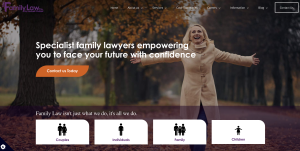
An example of good user journey is The Family Law Company, another company with whom we’re proud to work.
It is one thing to get users to your website, but you also have to keep them there! Positive user-experience on websites is very important. This includes the website being simple to navigate and browse, which leads to positive reviews and more likely to attract visitors.
This helps user click-through-rate, another very important factor when it comes to SEO ranking as it gives a good indication of the quality of the website, as do other indicators such as bounce rate (the number of visitors that leave after viewing one page).
As the majority of website users are now mobile users, it is imperative that a website is also mobile user friendly, meaning that it is easy to navigate via mobile.
A sitemap helps search engines discover URLs on your site. However, it doesn’t guarantee that all the items in your sitemap will be crawled and indexed. Nonetheless, in most cases, your site will benefit from having a sitemap.
If you have questions on how to optimise your law website, don’t hesitate to get in touch with our team.
About one year ago we said goodbye to our main office. Since then we have more or less thrived on a variety of working from home and using various shared office spaces. We continue to review how well this is working, and, like many businesses, we are learning and adapting as we go.
The quarterly gatherings are now an established thing in Infotex. Like many companies we used to have gatherings before, usually twice a year, but their purpose was different – they were a chance to get out of the office.
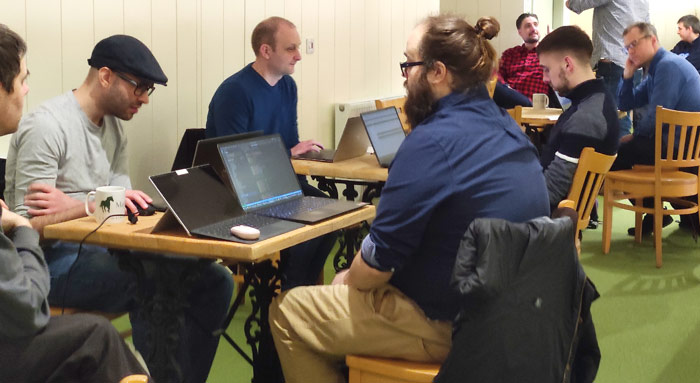
Now our gatherings are an important opportunity for the whole company to spend time together and use it to develop the business. Last week’s gathering was focussed on production. We wanted to bring together the opinions of everyone in the business, the people making and maintaining the websites and the people managing and delivering the services, and coordinate these into actionable ideas.
So we did for ourselves what we have done with our clients so many times over the years, and held a workshop. Our workshop leader on this occasion was Kris Parker, who true to form, made the session all the more engaging with some thoughtful preparation, to get everyone’s minds into problem solving mode. Code named “Project Dylan”, Kris broke down the workshop into two halves – brainstorming and shortlisting ideas.

The “interval” was nicely defined by an evening visit to our good friends at Fishers Gin, who kindly hosted us in their distillery, which is a stunning state-of-the-art facility located on the Aldeburgh beachfront. I have no doubt that the output of our workshop was enhanced by this inspirational interval.


We are lucky to be part of the CSF Group of businesses, which is based alongside Martley Hall Stud. Here we have fantastic modern office facilities, and layers of business support. We were allowed to take over the Equestrian Arena cafe, which proved to be a brilliant workspace with everything we needed, plus some beautiful thoroughbred horses to inspire us.


All in all, this latest gathering has been once again unique. We all learned something new, spent valuable time together, and gave serious decisions to development of our production systems in our constantly evolving operating environment.
The UN is celebrating today under the theme ‘DigitALL: Innovation and technology for gender equality’.
The gender gap in digital access, the threat of gender-based online violence, and an underrepresentation of women in STEM education mean women benefit from technology much less than they should.
Yet the digital world can be the key to eliminating gender inequity as technology has the potential to empower women, girls and other marginalized groups.
To celebrate international women’s day, Katie and Debbie give a little insight into themselves and their thoughts on gender equity in tech.

Katie has worked her way up through the company since being an apprentice. As Production Manager, she ensures that we can be confident in our commitments to our clients through proper planning and processes.
What do you think might encourage more women to work in tech?
I think engaging girls from a young age is key, not just in tech but in stereo-typically more ‘boy’ interests such as lego and math, so that they grow up not just thinking that certain jobs are male jobs. I think all children need to realise they really can follow any career that interests them, regardless of gender.
How do you think the tech sector would benefit from an equitable workforce?
I think a more diverse workforce (not just gender) benefits any sector, tech included. The more diverse we are the more we are able to consider an alternative approach. This isn’t just in developing a new solution for a client or creating an amazing design, but right down to our team dynamic and balancing skills. Everyone brings something different to the team and the more diverse our workforce the better we can structure the project team to meet a client’s needs.
What was your dream job as a child?
I never really had a strong desire for a specific career as a child. I loved art and spent most of my free time drawing and painting. I also enjoyed photography and I would often take pictures of animals and wildlife and then come home and draw them. As I got older I became really interested in Psychology and I had considered a career in criminal psychology. I have always been fascinated by the power of our brains – there’s just so much we don’t yet know!
What are you most proud of in your life?
I’m most proud of my growth in self confidence. I was very shy as a child and full of self doubt, when I think about where I am today and all that I’ve achieved both in my career and personal life I think my younger self wouldn’t believe it was possible! I owe a lot of that to running, it has allowed me to push my limits and find out just what I’m capable of – I do most of my best thinking whilst on a run too!

Debbie, Head of Sales, has remarkable experience as a business development manager. We asked her the same questions…
What do you think might encourage more women to work in tech?
Most definitely awareness needs to be raised at young girls through education at school.
How do you think the tech sector would benefit from an equitable workforce?
Each person brings with them different (hard and soft) skill sets; being a diverse workforce will always benefit companies.
What was your dream job as a child?
Forensic Scientist. When I was looking at careers back in the day (1980’s), this was classed as a man’s job.
What are you most proud of in your life?
Watching all my children grow up into loving, intelligent, thoughtful adults with successful careers all whilst being a single working mum with my own successful career.
Read more about gender and technology at www.unwomen.org.
We talk about security a lot in the articles, but we talk about it even more internally as it’s vital we maintain safe and secure sites for our clients.
The threat intelligence team at WordPress security experts Wordfence have recently released their annual report on the state of WordPress’ security. As hosts of many WordPress sites we have to understand the ever changing landscape in which these sites exist so we can combat likely intrusion points..
The key take-aways from this year’s report were:
That sounds bad – more vulnerabilities means more problems? Not quite. There has been an increase in companies who are CVE Numbering Authorities. CVE stands for “common vulnerabilities and exposures”, and is a publicly available catalogue of known security flaws. Historically many WordPress issues were not reported but because of the increase in the number and openness of these authorities, it’s made it much simpler for people to officially disclose security problems.

As WordPress, and the majority of its plugins, are built within the open source ecosystem, anyone can download the code and analyse it. The more people who are looking, the more issues the more are likely to be found. Finding and reporting such issues is increasingly becoming a full-time (paid) occupation for many developers who are then paid through the “bug bounty” programs. These ensure that the bugs don’t end up in the hands of malicious entities therefore these being responsibility reported helps everyone within the ecosystem.
Out of the vulnerabilities reported the most common issue was Cross-Site Scripting (XSS), with over 1,100 reports in 2022 alone this accounted for nearly half of all vulnerabilities disclosed. Cross-Site Scripting attacks are a type of injection, in which malicious scripts are injected into otherwise benign and trusted websites. More than a third of the XSS issues required administrative permissions on the website itself in order to be successful, so the risk was greatly reduced. This does highlight why users should only be provided with the minimum level of access they absolutely need, WordPress has a strong permissions architecture with varying roles with Contributor, Author, Editor, Shop Manager and Administrator being the most common each with different abilities.
Despite the number of reported XSS vulnerabilities there were around 3 times as many SQL injection attacks as there were XSS. A SQL injection attack is when an attacker tries to run database commands through a website which has not taken care to sanitise what people are entering into forms etc. There was also a comparable number of malicious file upload or inclusion attacks, these might be where someone gains access to the administration area and uploads a script to gain them further access rather than the intended image or text.
There are more and more leaked password lists available online as more data breaches occur. Credential stuffing is where hackers are utilising usernames and passwords taken from these lists to try and log in to the admin area of your site. When directories like HaveIBeenPwned (enter your email to see what leaks your info has been a part of) over 12 billion compromised sets of credentials it is no wonder that Wordfence collectively blocked over 159 billion login attempts in 2022. Surprisingly, this is actually a slight decrease on 2021.
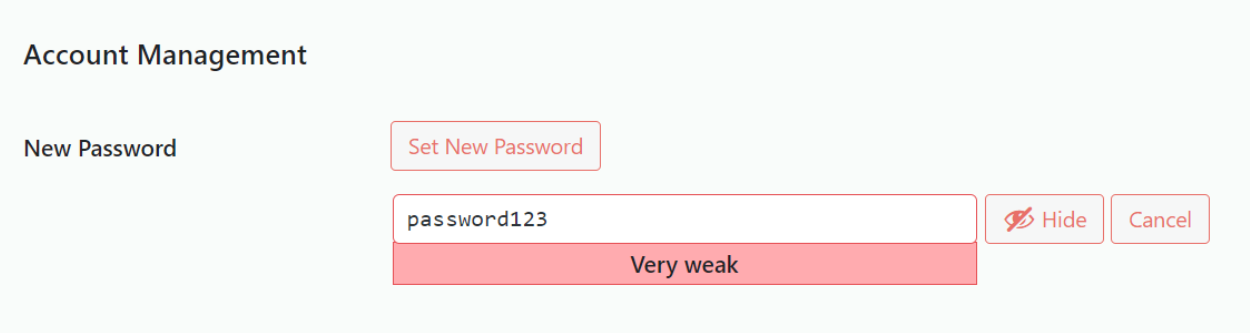
To keep your site safe please don’t use your WordPress login details on any other site, and make sure that when you create the password it is rated as Strong. These are good principals to apply to any site, and combining it with multi-factor authentication wherever it’s available will make it even more secure.
It has always been important to make sure that the core WordPress code, its plugins, and themes are kept up to date with the latest patches and it is no less true now. It’s obviously good practice for keeping your site secure, but also for extending its overall lifespan. Trying to upgrade very out of date plugins or WordPress code is very time consuming.
WordFence saw that most attacks targeting specific vulnerabilities were via known, and easily exploitable, flaws in this code on sites that had not received any recent updates. Infotex will take care of your site and make sure that it’s got the latest patches to keep things running smoothly. Indeed Wordfence stated “As such, the greatest threat to WordPress security in 2022 was neglect in all its forms“.
The second largest category of attacks was from known malicious “User Agents”. A “User Agent” is the formal term for a browser but also encompasses many other ways in which website content is processed. From Infotex’s own data around 60% of all requests are typically non-human in nature.
In addition to the more legitimate search engine robots (aka “bots”), many of these requests are from bot’s that have no purpose on a site or system other than to attack it.
A common task for these bots is looking for webshells – this is where an attacker has gained a foothold within a website and is intended to allow them to retain control and request the server to act on the attackers behalf, it’s commonplace for attackers to compete for access to webshells as nefarious access to one can cause huge problems for the site’s owner. Wordfence saw over 23 billion attacks of this type in 2022 across the 4 million+ sites they protect.
The full report is available to download via Wordfence.com
There has been a lot of noise in the media over the last month over the rapid rise of AI tools such as ChatGPT, Google Bard, and Microsoft Bing’s AI enhanced search. AI is nothing new, but ChatGPT reached 1 million users in less than a week and 100 million in under two months.
Basically it’s a chatbot. The tool lets you provide a natural-language prompt or question, and then ChatGPT responds back in natural-sounding language. The bot will use the previous questions / prompts to assist in responding to future questions on the same thread. Surprisingly (or perhaps to avoid the SkyNet of Terminator films), the bot doesn’t use the internet for its response – it’s solely based on the huge data set it has been trained on.
You can request it to answer questions or be creative by writing a poem on a specific topic. Many are using it to write covering letters for job applications, solve maths problems with a step-by-step breakdown of the answer, and write code that goes into websites.
At Infotex we polled the team as to how they’d been using it. So far they have:
ChatGPT isn’t foolproof though, and even ChatGPT’s owners OpenAI note “It’s a mistake to be relying on it for anything important right now. We have lots of work to do on robustness and truthfulness.”
ChatGPT’s rapid rise has prompted Google to expedite their new AI-powered search feature ‘Bard’. This uses natural language processing and machine learning to provide more relevant and insightful information to users.
I don’t expect it to replace the traditional ‘10 blue link results’ in Google but do expect the top section of the results pages to begin including AI-generated responses and answers to questions/queries.
This could be game-changing for search in many ways:
One downside of these generated answers would be fewer clicks on the organic results, which would be frustrating for website owners looking for traffic. As it’s Google, I’d expect to see them protecting their more commercial search terms which would currently be occupied by paid ads. It wouldn’t be too difficult to keep commercial queries (“car insurance”) and general questions (“what is Newton’s third law”) separate.
At the same time, Microsoft is also adding AI-generated answers to its Bing search results. Again, adding AI-generated responses to the search page results.
These are just a few examples of the many applications and uses of ChatGPT. Its versatility and ability to understand and generate human-like responses make it a valuable tool for a wide range of industries and use cases.
Providing your potential website customers with an easy to use, stress-free, but informative checkout can improve your conversion rate and reduce time spent responding to customer’s questions.
The checkout is one of the most important sections of the website. It’s an essential part of a customer’s journey, and their decision to proceed with or abandon a purchase can be heavily influenced in just a few clicks.
I’ve looked at a few options to consider implementing to improve your checkout.
Customers are no longer just looking for free delivery, though this can be a key driver in sales. Many are now actively looking for sites which use couriers they are satisfied with. There is always a balance between delivery cost and service, but we’ve seen sites that offer the consumer the choice of courier so they can pick the one that operates best in their area. Not only that, there are benefits of allowing the customer to pick the day the item is delivered on – at a fee of course.
By offering this choice a huge amount of trust can be gained, though it can cause logistical challenges. Your site management has to be on-point as well, to avoid publishing bank holidays as available dates etc.
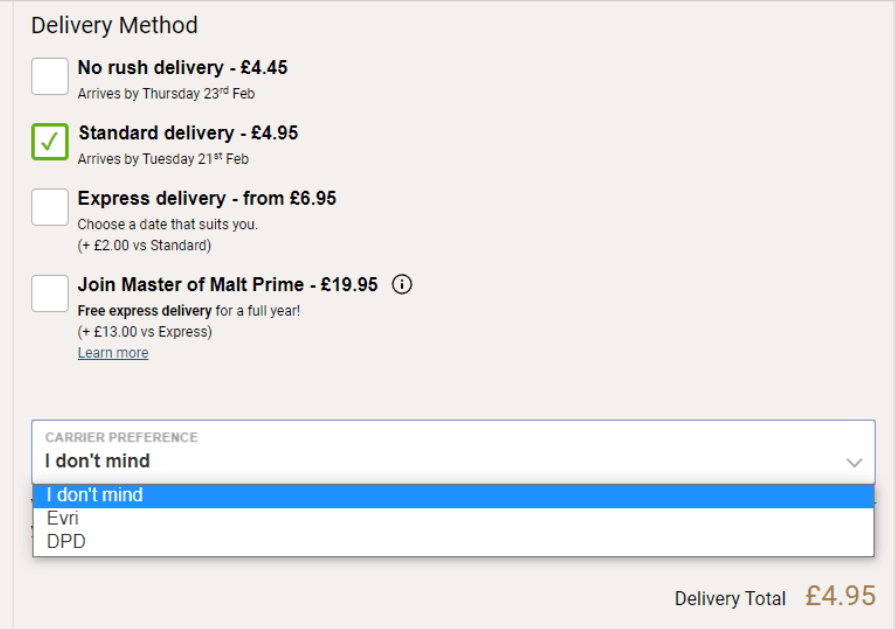
One of the best examples of delivery choice I’ve seen is from Master of Malt. The multiple delivery options are all clearly labelled and priced. They even allow the customer to select their carrier.
With any delivery section two things are key to clearly publish:
‘Hidden’ fees during a checkout can cause a high rate of abandonment. It’s not just the checkout’s job to communicate these items either – having them stated clearly on the product page and influence visitors to start the checkout process. Many sites now show a countdown timer to when you have to order by in order to receive delivery for a certain date. While some may see this as gimmicky and applying artificial pressure on consumers, it’s also providing valuable information on the product page.
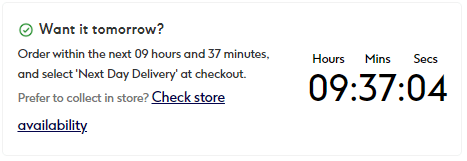
Boots.com shows a countdown timer on their product page showing how you can get next day delivery.
The days of customers only having a credit or debit card are long gone. Customers have different preferences, and providing a choice of payment options allows them to pick their preferred method. So called ‘accelerated’ payment methods like Apple Pay or Google Pay are incredibly popular as they allow a near 1-click checkout experience.
If you have regular repeat customers then providing a way for them to save their payment details for future use can be of benefit. Or even investigate automated repeat ordering – i.e. subscriptions – as a way for regular revenue.

ASOS.com provides a range of popular payment methods
Buy Now / Pay Later (BNPL) can also be worth the investment, especially for higher ticket items. Adobe Analytics found that 12 per cent of online purchases made in the UK in January 2023 were made with BNPL. Klarna, ClearPay and PayPal offer methods for customers who wish to spread their payments, and Apple’s Pay Later will be hitting the internet “soon” according to CEO Tim Cook [as of Feb 2023]. However, legislation is currently being drafted in the UK which will likely alter what lenders can offer.
During the checkout you might want to find out as much about your customers as possible, but the more you ask the more likely the abandonment rate will increase. For example, asking a customer where they heard about you isn’t a good idea during the checkout as a user has to stop and think. (Asking for this in a post order feedback survey or ad-hoc questionnaires would be better). Any information that can not be reasonably associated with the essential info for purchasing is best left off.
A big turn-off for consumers is being forced to make an account before they can checkout. Ideally integrate the account registration process into the checkout – many will ask if a user wants to create an account after they have placed an order.
Not everyone who starts the checkout process will finish the checkout process. Even the most successful sites will have abandoned baskets, sitting in a virtual pile gathering digital dust.
There are a few things you can do to try and tempt them back – if they were logged in or had provided an email address you could send a follow up email a few hours after their basket becomes inactive asking them back to the site.
You could also set up remarketing ads, which will show the visitor what product(s) they were going to purchase on ads as they navigate through the internet. This can help to keep your brand front and centre of the consumers mind while they make the decision to buy or not.
Are apprenticeships really a good way of gaining “skills for life”? What opportunities can they give you? Do we recommend them? What are the benefits of hiring an apprentice?
Inspired by these questions, our team share their experiences. From Will, our current apprentice, to Matt, Katie and Kris, whose Infotex journeys began as apprenticeships and finally from our managers Cameron and Ant on what it is like to hire apprentices into the company.

“This apprenticeship has been a great opportunity for me to get both hands on experience in my job role, whilst also getting the benefit of studying in order to complete my qualification.”
Will – Studio Apprentice
I help on the client support desk and with digital marketing alongside studying for my Business Administration qualification. Through this I have learnt the fundamentals of how Infotex operates, as well as specific tasks such as carrying out audits of clients’ websites and examining how to improve their SEO (Search Engine Optimisation) in order to drive visitors and visibility to their site. I am enjoying the apprenticeship because the hands-on experience of working while learning suits me as an individual.
It is challenging as a lot of the work is very technical, so I work closely with Tim for the digital marketing, and Matt for the support desk. They have been excellent for my development and are always available for any questions I have. Cameron, my mentor, has been very important because he makes sure I’m on course regarding both the job role and my coursework for the qualification. The apprenticeship lasts for one year minimum, and I plan to pass at a distinction level this July and hopefully go on to become a full-time employee.
I’d recommend an apprenticeship as it benefits you both as a worker, giving you vital experience, and as a learner studying about the role. This makes it a more comfortable transition to potential full-time employment.

“If you approach an apprenticeship with the right attitude and mindset then it can be really beneficial to both the individual and the business.“
Matt – Account Executive
I started my apprenticeship when I was 17, so I still had to be in some form of education. After studying Business Studies for a year at college, I had a real drive to get out and work full time. An apprenticeship offered me the best opportunity for that, and I was fortunate that Infotex (where I’d had two previous work experience placements) were looking to fill their IT Professional apprenticeship position.
My Infotex apprenticeship started back in October 2017 and really helped shape my career. Not only did it allow me to get my foot in the door at a really exciting and friendly company, but it has allowed me to understand what I enjoy and what I’m skilled at. Our support manager Cameron took me under his wing and has constantly offered fantastic leadership, making sure that I’m given the best possible opportunities. Infotex as a whole is a team full of supportive people, which has made the transition into more senior roles as comfortable as possible!
After my apprenticeship, I was employed in a full-time support role. Over the years I have gradually been transitioning into more account and project management. I hope to continue getting opportunities to enhance my learning and focus more on account management.
I would certainly recommend an apprenticeship, whether that’s to a young person starting a working life, or to adults who are looking to pursue a career in a different sector. If you approach an apprenticeship with the right attitude and mindset then it can be really beneficial to both the individual and the business. I personally have to give credit to everyone at Infotex, who’ve all been very generous with the time (and patience) they’ve given to help me progress as I have.
“You learn so many skills ‘out in the field’ that you just can’t learn in a classroom.”
Katie – Production Manager
Back in August 2006, I was offered a job (not an apprenticeship) at an estate agents as well as an apprenticeship position at Infotex, but I felt that the apprenticeship offered more opportunities for growth and development, and websites sounded more exciting to me than selling houses! Since the Business Administration apprenticeship, my development through the company has evolved from Production Executive > Production Studio Manager > Account Manager and finally Production Manager which is my current role.
I’ve been at Infotex for more than 16 years, in that time I have grown hugely in my self-confidence and achieved things I never thought I was capable of. I’m really proud to have worked my way up through the company alongside many colleagues who have been here longer than me. I have recently taken leadership of our content marketing and I’ve found it’s something that I really enjoy. I’d love to grow my skills in this area and work closely with our content team to strengthen our marketing this year.
I would absolutely recommend an apprenticeship. In my opinion it’s the perfect balance of working whilst gaining a qualification, and you learn so many skills ‘out in the field’ that you just can’t learn in a classroom.

“As Fat Boy Slim said (sampling Camille Yarbrough) “we’ve come a long long way together, through the hard times and the good.”
Kris – Account Manager
I was the first ever Infotex apprentice back in April 2001. My roles included general admin duties (filing, answering the phone) and updating website content (this was before the ubiquity of content management systems so HTML knowledge required). After my apprenticeship I was employed full-time, continuing with general duties, helping the project manager, and then moved on to the support team, and finally into project and account management where I am now.
An apprenticeship provides a hands-on, practical basis in the world of work, and enables a person to become an asset to a company while learning and gaining a qualification.

“We’re able to offer someone a place to learn and gain experience in an industry where they might not have had the chance otherwise”
Cameron – Customer Support Manager
The main thing about hiring an apprentice is that this is not just a job for them, it’s their way into an industry and career that they want to do long term. An apprenticeship is like an extremely long interview. Not only do we have several months getting to know the apprentice, it also gives them time to see how things work and decide if this is what they want to be doing.
An apprenticeship doesn’t always work out well, but when it does, it really does. We’re able to offer someone a place to learn and gain experience in an industry where they might not have had the chance otherwise, and hopefully offer somewhere to work once they’ve completed the apprenticeship. It’s real work that makes them a vital part of the team.

“I will always be very grateful to those of our employees who joined as apprentices and have stayed on for the duration – you know who you are.”
Ant – Managing Director
By training our own people from the outset, the teamwork is natural. We are able to invest the time and training needed to create an employee who knows their way round all the nooks and crannies of Infotex. There is no substitute for having a team who are deeply experienced.
We started with apprentices in the early 2000’s because they were cheap to employ! But over time we have found that apprentices simply make the best employees and are amongst the strongest team members. Our employees who have joined at a higher level have also, I think, benefited from our apprentices, from the core culture that they help bring, by which I mean that our company values are already the truth about us, not merely aspirations. And we remain fond of and proud of those who apprenticed with us and then moved on.
I will always be very grateful to those of our employees who joined as apprentices and have stayed on for the duration – you know who you are. Your loyalty and trustworthiness are beyond value to a small company which is handling a lot of tech and data. In just over 20 years we have counted more than 120 people employed in Infotex, some for years, some for weeks, and you are the binding force which sustains our development.
Infotex is ready to start helping the UK public sector with its most critical challenges, with the launch of the Digital Outcomes 6 (DOS 6) framework.
The Digital Outcomes 6 (DOS 6) framework facilitates the procurement of digital services to accelerate the success of applying technology solutions to solve UK public sector challenges. Buyers in the UK public sector can now procure an extensive range of digital services from Infotex including bespoke software solutions, database development, website design/development, SEO, hosting and support.
In addition to this framework, we have also recently been confirmed as a supplier on the G-Cloud 13 framework too, further strengthening our offering to the public sector.
Discover how our team can help you on your journey.
Talk to us today