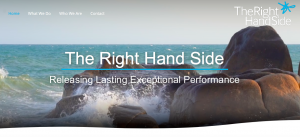
The Right Hand Side is a consultancy firm that works with individuals, teams and organisations to help them be at their best and achieve lasting exceptional performance. They work with successful clients from a wide variety of backgrounds and walks of life, who are looking for certain aspects to change – individually for themselves or their relationships, or collectively for their team or organisation. They offer individual coaching, team coaching, or executive and organisational development.
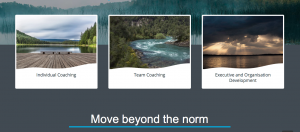
Having worked with them since August, Infotex has developed and launched a website to showcase what their brand offers. In alignment with The Right Hand Side’s sentiment that exceptionalism is dependent on cooperation, clarity, determination and imagination, we worked together on this to create a website that showcases the very best of Flexipress website design.
To take a look visit www.therighthandside.com.
Anyone who watched Netflix’s The Social Dilemma this month might have found themselves checking their average daily screen time, and they’d be right to. You better check yours now.
The conversation around the disruptive social potential of technology and social media is not a new one, with data-collection scandals such as Cambridge Analytica, statistics on mental health, and misinformation / fake news (to name a few) all daring us to confront social media with a critical eye. But this documentary – led by Silicon Valley minds such as former design ethicist at Google Tristan Harris, and co-creator of the Facebook “like” button, Justin Rosenstein – confirms that such technology companies are actively chasing our physiological tendency to addiction, in order to profit, and exposes social media’s potential to disrupt our democratic rights.
This is the first time that the seemingly obvious points – technology as dystopia, media and brainwashing – have been fed to the masses in a convincing documentary, and is now a forerunner of mainstream conversation about tech. The documentary has taken viewers to a new level of panic, asking people to delete their social media accounts on the premise “how can you wake up from the Matrix, when you don’t know you’re in the Matrix?”
It is more than somewhat ironic that the documentary is aired on Netflix, the online streaming platform which achieves its success through manipulation of the Attention Economy. And while it might work for a while, as people determinedly delete their social media accounts, I can’t see this bringing platforms to a steady halt. More likely, people will be re-downloading their apps as soon as they need to reconnect with someone, introduce a new market, or sell a product. In the same way, The Social Dilemma is not all doom and gloom: it sees a technological future and calls for a new approach to the conversation around technology, one that demands humanity and ethical responsibility.
Which brings us to our social dilemma: what does this global conversation mean for digital marketing strategies? Businesses nowadays cannot denounce their social media presence entirely without risk of losing out to their market competitors. As the runaway train hurtles down the track, the livelihoods of many of our businesses depend upon jumping on it, or else getting left behind.
Instead, then, it might be an idea to re-examine the pros and cons of the social media sites that you or your business uses. Is it necessary to be on six platforms? Could you limit it to only the relevant ones? Is that Twitter and Linked In, or Facebook and Instagram? Social media companies work by ensuring that you are the product (as the saying goes, if you’re not paying for a product, you’re the product). So, if you want to be making the most of social media marketing, chances are you’ll need to give it a budget – make sure this is necessary and worthwhile. It is also probably worth thinking about how strategies used by social media giants might be affecting your own employees. They are at the mercy of this too, might they be scrolling against their will, wasting time? In short, which platforms are worth paying for, and how can you make sure you navigate them ethically and efficiently?
If you’re anything like me, you will think that the conversation around social media doesn’t apply to you, that you’re under control and not giving any unwanted attention to platforms, and that your business isn’t affected. But next time you find yourself checking your Gmail account for no particular reason, or getting an unnecessary notification and opening it, think again. In this world, we are all affected by social media, directly or indirectly, no matter how connected we are. The internet is a force for good, and can remain so if we channel it correctly. We just need to be more mindful of how we use it (and how it uses us).
What your digital agency wants to know is: how can we make your website work for you? A solid website brief can give you the best chance of reaching your goals in the most cost-effective way, by helping us understand what you want to get out of your site.
A successful project requires many different people from across different teams to work on your project – from strategists and developers, to designers and creatives. So, no matter how professional your web design agency, a well structured, informative brief can’t go amiss in helping everyone on the project maintain a clear vision for your website and achieve the best results.
Before you begin your brief, don’t hesitate to utilise the support on offer from your agency if you already have one. They should be your partner in this process, and guide you through it. The best results occur when we meet with clients before asking for a website brief, so we can help them map out their objectives.
What to include in your brief to begin with:
An idea of what your objectives are will help digital agencies like us understand the overall picture. Outline your main goals: are you trying to generate leads, or to showcase quality? Then outline your primary call to action, that is, what you want people to do when they reach your website (fill in a contact form? purchase a product? pick up the phone?).
This is important because ultimately, like you, your web designer answers to the needs of your target market. Who are you aiming your website at? How would you describe your average customer?
If you have an existing website that you’re looking to replace, then there will be specific things about it that aren’t working for you. Singling these out and deciding what needs improvement will help to inform your needs for the new website.
What websites have you seen that you do/don’t like? They don’t need to be in your industry, but may help our designers to understand your vision for your new website. Take into consideration the layout, the way the site feels, how easy/hard it is to use, and find what you need to help us understand your vision. Perhaps include the web addresses of 3 – 4 websites, and specify what you do or don’t like about them.
Who are your main competitors? What can we learn from them? Do you want to follow in their footsteps or break the mould? You know more than your digital agency when it comes to your market, and knowledge of your competitors is one of the ways you can share that knowledge with us.
Have you considered your content and site structure? We will help guide you on this, working with your knowledge of your industry to ensure the website meets its objectives. You might need the copy transferred from your existing website, or perhaps you want to produce new content entirely – we may need to consider resources such as copywriting and photography, unless you are able to do these in-house.
Do you have brand guidelines for us to follow? Are you able to provide us with the assets? If you don’t, we can work with you to give you an online presence that works for you, even without the full branding exercise.
What’s your deadline for the website to launch? Do you have a trade show or marketing piece that dictates your deadline, or are you flexible? We will always do our best to meet your expectations or find a way to ensure that you have a great online presence in place, even if all the bells and whistles aren’t quite ready!
It helps us to know your long term business plan for once the website is launched, if you have one. How will you market the new website and drive traffic to it? Have you considered areas such as Google Ads or search engine optimisation (SEO), or perhaps Facebook advertising? Our team can advise on the best approach specific to your business needs and put together a tailored package of on-going support to suit your budget.
Remember that your brief is not the done deal – think of it as a foundation to build upon. As your plan develops, a good web design agency will have lots of ideas and questions to help you realise your objectives.
If you have any questions or want further advice, feel free to get in touch with us at Infotex.
There are over 365 million domain names registered across the globe, so in such a crowded space how do you find the right domain for you?
The domain name is what you type into the address bar to visit a website. Domains are unique and registered against central lists to prevent duplicates.
In the background, computers are using IP addresses, a string of numbers, to identify sites, but these are translated to the much easier to remember domains.
There are two parts that make up a domain name, the identification string (aka the first bit), for example, “infotex” and the ‘extension’ which is usually the part after the first dot, in our case “.uk”.
There is a massive range of domain extensions available with the most common and familiar being .com and .net. The majority of countries will also have geographically specific extensions (also known as country code top-level domains – ccTLDs) like .uk, .fr, and .de.
Extensions such as .info and .biz are part of the mix, and in 2011 ICANN launched the ‘new generic top-level domain’ (new-gtld) program which added thousands of extensions such as .yoga or .app, and continues to be added to.
Google was supposed to be Googol – a misspelling by a graduate student while checking domain availability was to blame
What’s a domain worth?
It’s often said that the value of any product is only what someone is willing to pay for it, however, the rights to some domains, especially short ones are coveted.
oa.com sold earlier this year for $600,000 however even this is eclipsed by the rental of vegas.com that could net its owner $90 million. Some companies even go so far as to value and insure their domain, cars.com was recently valued at $872 million.
With sought after domains on popular extensions fetching many thousands people have looked to other extensions to launch their brand online.
As there are only a finite amount of .com or .co.uk domain names it is becoming harder and harder for new companies trying to find a suitable domain name. However, to address this, more and more extensions are being created.
The aim of these new extensions is to more accurately describe your business (though we’re not sure how this works with .ninja…) and vastly grow the range of domains available.
Also consider whether your preferred choice of domain has any legal requirements – .eu domains require the operator to be within the European Union and as such from 1st Jan 2021 most UK businesses will no longer be eligible to hold a .eu domain.
Why not have your own extension?
In 2011 ICANN announced that they would allow brands to register their own top level extension, they received over 2,000 applications although many were subsequently declined, often due to the significant costs involved in running a domain extension. However some companies make use of this, such as Toyota’s global.toyota.
It still remains to be seen how popular many of these domain extensions will prove to be, and those which are not could be retired in the same way that .orientexpress lasted just a year [www.iana.org/domains/root/db/orientexpress.html].
With over 19 million domains, the most popular country-code extension is .tk – the small South Pacific island of Tokelau. The .tk is so popular due to their business model giving many domains for free.
.uk domains
All .uk domains are overseen by a government-supported body called Nominet. Infotex is proud to be Nominet members & tag holders meaning that we can directly register and manage .uk domains on behalf of our customers.
For most businesses based in, and primarily trading within, the UK, the most logical domain extensions are .uk or .co.uk although it’s possible to also register .ltd.uk, .me.uk and various other UK specific extensions.
Public awareness still favours the .co.uk domain types, however, .uk is becoming far better recognised.
For brand protection purposes we would recommend that most businesses possess their choice of name in both .uk & .co.uk extension. Infotex, for example, chose to switch to the shorter infotex.uk but still retain ownership of infotex.co.uk and it just redirects to the main site. [Edit: 2020: We have since done this!]
Any domain owner is legally responsible for their use of that domain, to this end, the need for domains to be registered to the correct individual or business has been a pressing concern for law enforcement for some time.
Starting from 2014, ICANN introduced a process requiring domain owners to validate their contact details via the email address held against their domain. When a domain name is registered, transferred or due to renew domain owners will receive an email asking you to validate the email address. Failure to do so within 15 days will mean the suspension of the domain name and any associated website/email, until it has been validated. Validation is simply clicking a link, you should not be asked to enter a username and password or any other details.
A similar Domain Quality process exists on .uk domains where company registrations and the electoral roll are used to verify that a domain owner is an actual legal entity.
The first domain registered was symbolics.com in 1985, for the now-defunct Symbolics Computer Corporation
If you’d like to check the availability of any domain name then please get in touch.
Websites are constantly evolving; like all modern technology, they don’t sit still for very long. While some evolutions are more subtle, as through sophisticated CRO campaigns designed to increase page conversions rates, some are more monumental, sparked by a shift in devices or the way we use the internet.
These larger changes to web design tend to follow a cultural shift which changes the way in which business can communicate with consumers. The most obvious example of one of these changes was the introduction of the ‘smartphone’ and the shift to mobile ‘responsive’ website designs.
The next big cultural shift that will impact web design is no doubt the one we are living through now; the impact of COVID 19 on the world has seen a change in the way in which many of us work and interact with our computers. The results of working from home have been surprising, revealing even to the most old school companies that often employees can thrive and be more efficient if given a longer leash. This has in all likelihood accelerated the timeline, with the expectation that a lot of will have adopted flexible working patterns within the next 12-18 months, like the anticipated two-day in office, three-day remote, working week. With this kind of large scale change to the way in which we work, we should expect our computers and other products to pick on all of the new ‘pain points’ of flexible working and make modifications.
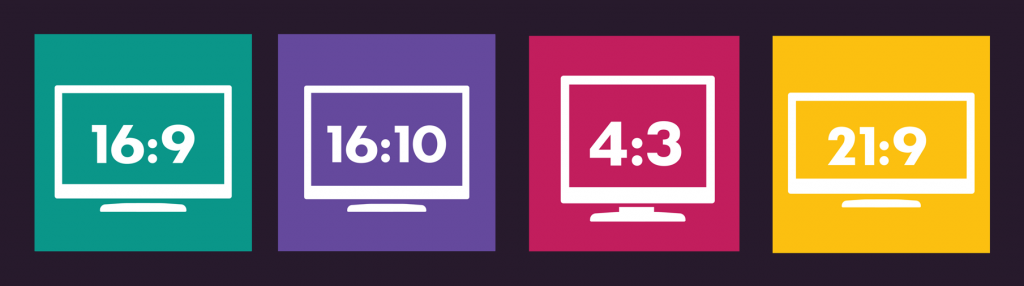
The need for laptops to be more productive on-the-go, away from the traditional ‘work station’, has already led to a visible shift in the world of laptops and computers, with the design of higher end 2020 models from Dell and Apple being made more proactive for ‘work’ rather than ‘play’. The most notable trend is the change in screen dimensions; the ‘envelope’, ideal for movies and photographs, is being steadily replaced by a ‘squarer’ design that allows for programs like Word and Excel to make better use of the screen. Dell’s new range of XPS laptops have adopted a taller 16:10 ratio rather than the traditional 16:9. Apple seems to be following suit, and for a few years now they have been very much pushing their iPad devices as realistic alternatives to high end laptops, boasting the more productive 4:3 ratio screens. And with rumours of a bezel-less design refresh coming to their entire iMac and Macbook 2020/2021 range, we should expect them to follow suit.
A new screen ratio is potentially an exciting evolution for website designs, particularly for companies operating in the B2B markets and other industries that see the majority of their traffic come via ‘desktop’ devices. The prospect of a taller, squarer website will allow for a much more marketing real estate on customers screens. We could see the end of cinematic designs that use fill screen imagery and minimum text, or we might see a step back to old school website designs trends that fight to get as many key messages ‘above the fold’ to ensure users see them on first landing.
Regardless of the trends we might see, this change in screen ratio illustrates the ever changing nature of marketing online and that clever thinking is needed to use the tools available at our disposal. At Infotex, when talking to clients who rely on desktop traffic, we always make sure that we take a closer look to the exact screen dimensions from the previous website’s stats. It has resulted in many successful websites that are designed with the clients marketing objectives and their specific customers’ user experience in mind.
When our team were given a tour of the ACC Art Books offices, we knew we were in for a great project, becoming more and more excited by the prospect of working with beautiful imagery and artistic content.
ACC are one of the world’s leading publishers and distributors of books on the arts and visual culture. Over the past 50 years they have collaborated with some of the world’s most famous artists, fashion designers, architects and photographers, distributing their books world wide. Just sitting in their meeting room we were surrounded by beautiful ‘coffee table’ books that were works of art in themselves.
The existing website was over a decade old and in need of a refresh, but we needed to keep the site clean and simple to really let the books do the talking. To push their global reach and tailor content to specific audiences, we designed and built four websites: UK and US versions for both the ACC Art website and its sister company, Images Publishing. We worked closely with their publishing software partner to ensure that all four websites can be updated quickly and easily by their teams around the world.
Almost 18 months in the making, it has been an exciting journey and one we hope to continue as we work with them to support their team long term.
Visit www.accartbooks.com to browse their exciting and extensive list of publications.
Infotex is proud to announce the website launch for the Framlingham Tennis Tournament, the oldest UK tennis tournament after Wimbledon! They have been offering fun and competitions for all ages for 125 years, located on the stunning grounds of Framlingham College in rural Suffolk. Each year the tournament boasts 50 events, with a reputation for great fun and Grade 3 level tennis for all ages from 8-80 – something for everyone!
Framlingham Tennis started their journey with us back in June this year to undertake the project of introducing a brand new site. The development of this website has taken a lot of thought in understanding what the tournament means to the people involved, an effort which has paid off, and we look forward to our continued work with the Committee.
“Infotex were fantastic to work with on this project. They were professional and understanding, and really took the time to ensure that the new website captures the essence of what Framlingham Tennis Tournament is really all about.” – The Framlingham Tennis Committee
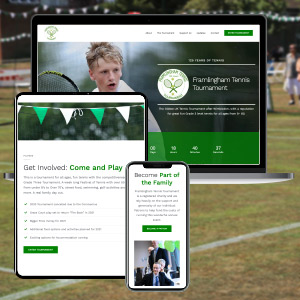
The Tournament is funded by generous sponsors, which means that, as well as the competitors, the people that enjoy the tournament in other ways are just as key to their big community. If you are passionate about tennis and the importance of offering fun family tennis for all ages alongside competitive events, and have time to join the Framlingham Tennis Committee, then please visit their brand new website to send them a message!
Go check out their brand new revamped website at: https://www.framlinghamtennis.co.uk/
They look forward to seeing you at the next tournament on August 2nd 2021!
The approach to the launch of Dangler on Friday 24th July has been an exciting time for everyone at Infotex, with an encouraging 18,000 visitors to the Dangler website in the last month suggesting we’re not the only ones eagerly anticipating the forthcoming action.
Founded by three Suffolk brothers, Dangler is the first ever social media marketplace website that provides a platform for the everyday angler, alongside retailers and manufacturers, to buy and sell their fishing tackle. Its aim is to create an innovative community that enables anglers to share their passion, providing a social platform that includes lower costs, buying and selling protection, and the opportunity to build a social profile and communicate with fellow anglers.

Infotex have been with Dangler every step of their online journey. Dangler came to Infotex in August 2019 with a mission to revolutionise the way that anglers buy and sell their fishing tackle, and Infotex took on the task with enthusiasm. Initially, our design team created three sets of designs: the desktop, mobile, and the future app designs.
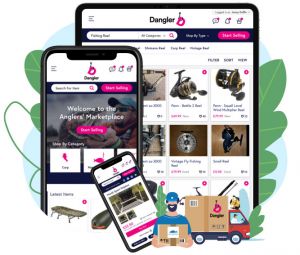
We then created a Dangler ‘community’ website, which was designed to generate some interest from the potential market. This enabled Dangler to attain lots of data through users signing up to hear all about the latest and upcoming news with Dangler and the progress of the exciting new website. Behind the scenes, a large team were working towards building a solid, secure, and user friendly website, which you can now find by visiting www.dangler.co.uk.
The fun doesn’t stop yet. We will now be supporting Dangler moving forwards, as well as rolling out two more phases of development for the website, and bringing an IOS and Android App to the party. Watch this space!
Check out Dangler’s promotional video from The Northern Angling Show on youtube: https://www.youtube.com/watch?v=nMYf6NVvcsw
Let’s say you’ve installed a new security system in your home. You’ve got an alarm, secure windows, and a shiny new lock on the front door. Would you then give your spare keys to an untrustworthy neighbour? Or leave them on a park bench? Perhaps you live in a safe neighbourhood. Unless, of course, that neighbourhood is the internet.
Cyberattacks on businesses can lead to the loss of customer trust, if not financial setbacks that are difficult to recover from. If you are working with WordPress or Shopify and a website developer such as Infotex, they will prioritise the security infrastructure of your site – the home security system, we might say. This includes ensuring that the underlying code is written with security in mind (for example, not allowing malicious scripts to run or files to be uploaded) and configuring the server to protect the site (often utilising services such as Cloudflare to filter traffic). These important steps should never be overlooked, but the health of your business online relies on you also doing what you can to keep your website secure, as most attacks occur from social engineering weak points, not server breaches. You can help protect your website by keeping hold of your keys: maintaining secure passwords, browsers, and data systems.
E-commerce websites are particularly vulnerable to cyberattacks because the customer data and passwords that they carry are considered of great value to attackers. Nearly half of all cyberattacks are committed against small businesses, according to Cybercrime Magazine, so if you are the owner or admin of a website, have a read here about what simple steps you can take to keep your information safe.
Phishing. According to the 2020 Data Breach Investigations Report 22% of breaches involved Phishing (Verizon). Phishing is one of the biggest social engineering threats and refers to fraudulent methods used by attackers — typically via email, text, or phone — to trick people into providing sensitive information like passwords, usernames, credit card numbers, and social security numbers.
Malware and ransomware. If it infects your device or network, malware or ransomware has the potential to lock you out of your important data and systems. Preventative measures for this include regular backups of your site data, and avoiding suspicious links or the installation of unknown software. The 2019 DBIR reports that 94% of malware was delivered by email.
As Bruce Schneier wrote at the turn of the century, ‘Security is a process, not a product’. If you can stay active and understand the risks then you’ll be in a much better position to drive your business forward online.
We are blessed to work in digital, and during the lockdown period since 20 March, the team at Infotex has continued to work with our clients to complete website projects. We have launched 12 new websites in this period, with more to follow soon.
All of them are businesses which are having to adapt rapidly to a changing world and we are proud to support them.
30/06/2020
Exciting, different, and delicious, Niche Cocktails offers mixology quality cocktails served straight from the can.Currently offering four delicious varieties, including Macha Mojitos and Passionfruit Daiquiris, Niche Cocktails are available in a variety of gift and variety packs, as supported by the new site.

Niche had to change tack as a result of COVID19 – while they were originally focussed on trade sales to pubs, restaurants, hotels, and event catering where they would usually be served as a convenient alternative to an onsite mixologist, they have been moving to direct to consumer sales. With such a great product on the market, and reliance on online sales, we hope that their choice to adapt in these extraordinary circumstances pays off.
The site was designed by Virtue Design, a Shout About Suffolk hub member and part of the Niche team.
Give them a try – go to www.nichecocktails.co.uk
Conatus’ highly qualified and experienced bookkeeping team provide clients with certainty around their business’ financial issues, as well as some other key company management areas.
Conatus Associates approached us to help increase the bookkeeping side of their business by having a separate website for Conatus Bookkeeping and draw in new clients. Working closely with the Conatus team helped us to successfully launch their bookkeeping services to a brand new site, improving their presence and reach online.

From the mind behind The Cufflink Store and The Tie Store comes a just as classy, just as neat, gift to the sweet tooths out there. With more sweets, Pick n’ Mix, and personalised packages than you could desire, this site has been a popular lockdown destination for many so far.
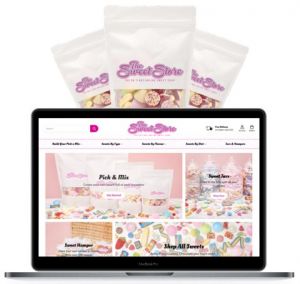
Get the lockdown pick-me-up from the new website: www.thesweetstore.co.uk.
Operating out of the Stapleford Aerodrome, London Pleasure Flights will take you on a memorising helicopter tour of central London. Winding along the Thames you’ll see all of the key landmarks from the o2 to Buckingham place and back again.
The new website captures the character of London Pleasure Flights’ fun brand and allows you to buy your boarding pass (valid for 12month) online via Paypal buy buttons.
www.londonpleasureflights.co.uk

The Alde Valley Spring Festival, based at a small farm in the beautiful Upper Alde Valley on the Suffolk Coast, celebrates the importance of the visual arts, local foods and contemporary crafts for around four weeks each April and May each year.
In response to current circumstances, the physical 2020 festival has been cancelled. However, the festival has been adapted with the placement of much of the Festival’s 2020 programme online at www.aldevalleyspringfestival.co.uk.
Please join in with the festival in its new form, as it strives to maintain a spirit of compassion and support by bringing people together in celebration of food, landscape, and the arts.
Making your office work
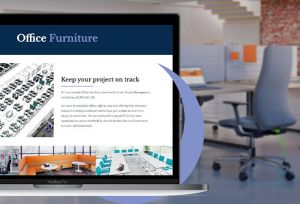
MP Serv Ltd is a leading provider of office supplies, office furniture and other office products based in the South East. With 20 years experience, MP Serv focus on providing an individual service to their customers to ensure they get the right products – but they needed to fully communicate this brand purpose online. www.mpserv.co.uk
Over a quarter of a century after Tim Berners-Lee’s extraordinary invention of the World Wide Web, it has become clear that the space occupied by websites in the world has had an intoxicating effect on societies across the globe. As a blend of scientific computer systems with media and advertising – sitting somewhere between the IT Crowd and Marketing’s Mad Men – websites bring the rational and emotional together, allowing organisations (and individuals) of all shapes and sizes to grasp opportunity for growth and change – some with alacrity, many with difficulty.
In more than 15 years of producing websites for clients, I have found that projects almost invariably open up much more than expected within an organisation – frequently, a “new website” project becomes a trigger to further business development: working out brand proposition to the market, re-thinking operations, reorganising departments, understanding audiences. A company’s website is the place where everybody – customers, suppliers, employees, potential employees, shareholders, potential investors, the media, competitors and government officers – will do at least some of their fact finding about your organisation. And more recently, it is the place where they choose to do business with you also.
The opportunity to present your organisation to the whole outside world, and then invite them to interact with you online, demands attention to detail and substantial investment inside the organisation to get the benefit of having a successful website. While websites can be and often are created by one person, or a small team, using minimal resources, their success usually depends on a team effort, with contributions great and small from everyone. Maintaining momentum to keep working on a website requires a cultural attitude that values the website and recognises its importance, preferably lead from the top.
The past 3 months has seen drastic changes in marketing patterns, most notably in an increase in online sales and interactions. So, while I have been told many times that websites are easy to create – that they will soon be able to be created by Artificial Intelligence, that the cost of creating them will plummet, and that there is no need to hire developers – I stand by the need of professional website design and build services at a time when they have never been more important, and I look forward to the next 25 years of continuing expansion and development of the website, as it undoubtedly continues to be at the forefront of how human beings around the world are able to collaborate ever more closely.
You can browse the first ever website at http://info.cern.ch.

On April 23, amidst the froth of the Covid-19 crisis, we have been acquired by Shout About Suffolk, and we are now operating within the warm embrace of a family of emerging brands, with access to some fantastic business brains.
Shout About Suffolk works to nurture the next generation of Suffolk businesses, helping talented companies reach their full potential. Its founder, Paddy Bishop, has commented that “we have long shared a great relationship with Infotex, and know that thanks to their commitment and dedicated team, they will be able to help more Suffolk businesses achieve local, but perhaps global recognition too.”

The commitment to Infotex by Shout About Suffolk is a tremendous boost, during a difficult time for all of the business community. We welcome having the opportunity to share in the excitement that goes with new entrepreneurial ventures, and to being an integral part of our clients’ success.
As we all worry our way through this Covid-19 pandemic, we can be certain that the world and our markets are going to be changed forever. Online sales and business activity have been critical during this lockdown and it seems that their growth will accelerate. One of the keys to the recovery of our economy and wellbeing is going to be these entrepreneurs, who seize the opportunities to build new businesses in new ways, so it is exciting for all of us in Infotex to be a part of it.
Discover how our team can help you on your journey.
Talk to us today